“Peo-peo-mox-mox”
by Paul Kane (1810–1871)
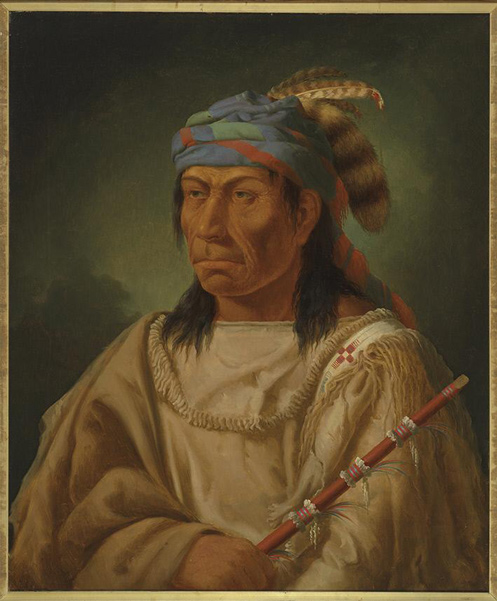
Portrait of Piupiumaksmaks, Walla Walla (1849—1856). Oil on canvas, 76.3 x 63.7 centimeters. Courtesy Royal Ontario Museum, https://rom.on.ca.
In late July 1849, Peopeomoxmox returned to the mouth of the Walla Walla with a war party that had lasted eighteen months. Their purpose was to avenge the death of his son at the hands of American settlers at Sutter’s Mill in 1844. Several of the party died from measles and thus weakened, unable to fulfill their mission.[1]Charles Wilkes, The Narrative of the United States Exploring Expedition During the Years [1838–1842] (Philadelphia: Lea and Blanchard, 1845), 4:281–284; Robert H. Ruby, John A. Brown, and Cary C. … Continue reading
Walla Wallas, sometimes Waluulapam and sometimes on this site as Walula, are a Sahaptin-speaking indigenous people that lived primarily along their namesake river. There has been disagreement among historians regarding the nation’s etymology. Stern suggests that it is a diminished form of the Sahaptin wana ‘river’. Wallula or Walula, walúula was their primary settlement just above the mouth of the Walla Walla.
Walla Walla came to be applied by whites to other nations such as the Umatillas. In late 1949, the Umatillas, Cayuses, and Walla Wallas officially became The Confederated Tribes of the Umatilla Indian Reservation, an alliance based their 1855 namesake treaty with Isaac Stevens.[2]Theodore Stern, Handbook of North American Indians: Plateau Vol. 12, ed. Deward E. Walker, Jr. (Washington, D.C.: Smithsonian Institution, 1998), 419.
Selected Encounters
Flag Presentations
by Joseph A. Mussulman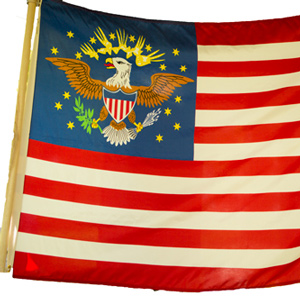
Lewis and Clark usually distributed flags at councils with the chiefs and headmen of the tribes they encountered—one flag for each tribe or independent band.
October 16, 1805
A musical welcome
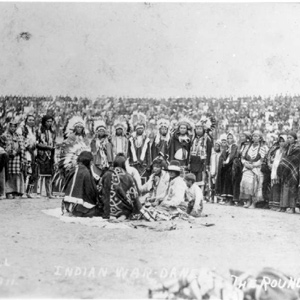
The paddlers negotiate the last of the Snake River rapids and the expedition arrives at the Columbia River. Soon after, they are given a musical welcome from a large group of Yakamas and Wanapums.
October 18, 1805
Down the Columbia
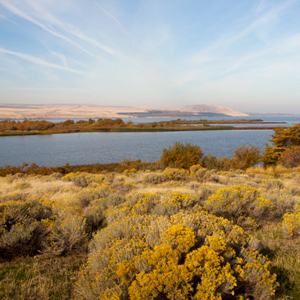
At the mouth of the Snake, the captains council with the Wanapums and Yakamas. Late in the day, the expedition heads down the Columbia and camps below the Twin Sisters in Wallula Gap.
October 19, 1805
Frightened Umatillas
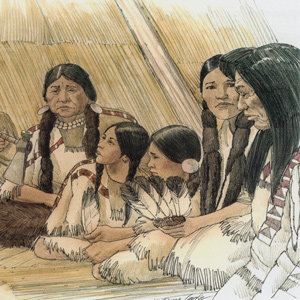
After passing Hat Rock in the Wallula Gap, Clark frightens several Umatillas who—after seeing Sacagawea—learn he is not part of a war party. The day ends with mutual smoking and fiddle music.
April 26, 1806
A crowded, dusty trail
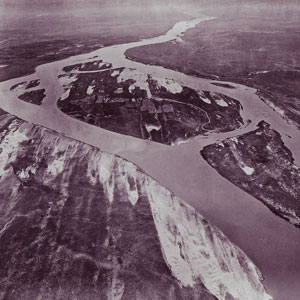
The Corps of Northwestern Discovery continues along the north shore of the Columbia River reaching the low plains near present Plymouth, Washington. The trail is dusty and crowded with people on the move. At evening camp, a young boy catches several Columbia River chub, a species new to science.
April 27, 1806
Yelleppit's village
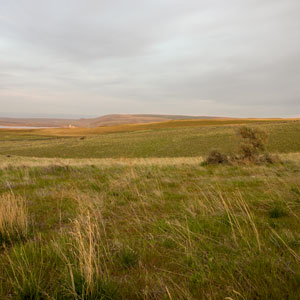
Moving up the Columbia River, the expedition passes the Umatilla River and then climbs to the high plain above Wallula Gap. Late in the day, they are met by Chief Yelleppit who escorts them to his village opposite the mouth of the Walla Walla. There, the captains learn of a good road to take them back to the Nez Perce.
April 28, 1806
Yelleppit brings a horse
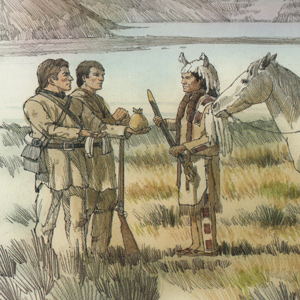
A Shoshone prisoner is found at Yelleppit’s village across from the mouth of the Walla Walla and talks begin with Sacagawea, Charbonneau, and one of the French men acting as interpreters. Yelleppit brings Clark a horse, Clark gives medical aid, and Pvt. Frazer buys ten fat dogs for consumption. The day ends with singing and dancing.
April 29, 1806
Crossing the Columbia
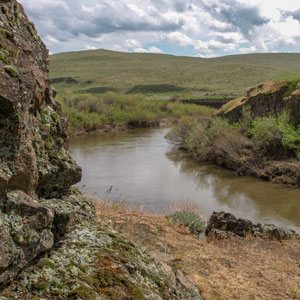
Using Chief Yelleppit’s canoes, the men ferry baggage and people across the Columbia River. Lewis gives one of his pistols and two small Indian peace medals in exchange for two horses, and Clark treats several local People for sore eyes. Lewis prepares a specimen of cous, a staple Native vegetable, and they camp a short distance up the Walla Walla River.
May 1, 1806
Along the Travois Road
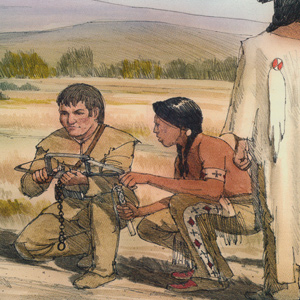
While traveling along the Travois Road in southeastern Washington, the corps’ guides and companions argue about which trail to take. Three honest Walla Walla men return a forgotten beaver trap, and after 26 miles, they camp on the Touchet River near present Waitsburg.
June 23, 1806
Three Nez Perce guides
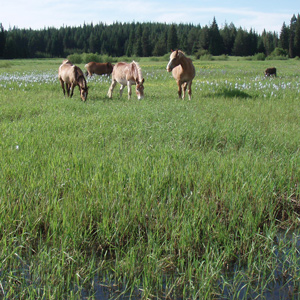
While waiting at Weippe Prairie for mountain snow to melt, the hunters imitate bleating fawns to call in the does. Three Nez Perce guides arrive, and all is made ready to cross the Bitterroot Mountains.
Notes
| ↑1 | Charles Wilkes, The Narrative of the United States Exploring Expedition During the Years [1838–1842] (Philadelphia: Lea and Blanchard, 1845), 4:281–284; Robert H. Ruby, John A. Brown, and Cary C. Collins, A Guide to the Indian Tribes of the Pacific Northwest (Norman: University of Oklahoma Press, 2010), 371. |
|---|---|
| ↑2 | Theodore Stern, Handbook of North American Indians: Plateau Vol. 12, ed. Deward E. Walker, Jr. (Washington, D.C.: Smithsonian Institution, 1998), 419. |
Experience the Lewis and Clark Trail
The Lewis and Clark Trail Experience—our sister site at lewisandclark.travel—connects the world to people and places on the Lewis and Clark Trail.

Discover More
- The Lewis and Clark Expedition: Day by Day by Gary E. Moulton (University of Nebraska Press, 2018). The story in prose, 14 May 1804–23 September 1806.
- The Lewis and Clark Journals: An American Epic of Discovery (abridged) by Gary E. Moulton (University of Nebraska Press, 2003). Selected journal excerpts, 14 May 1804–23 September 1806.
- The Lewis and Clark Journals. by Gary E. Moulton (University of Nebraska Press, 1983–2001). The complete story in 13 volumes.
This site is provided as a public service by the

Lewis and Clark Trail Alliance
with additional funding from the following:


