Currants and Gooseberries
Eight Ribes species
by Kristopher K. Townsend
Of the dozens of currants and gooseberries along the Trail, Lewis likely preserved specimens of eight different species. Four of them reside in herbariums and four are lost.
Eight Ribes species
by Kristopher K. Townsend
Of the dozens of currants and gooseberries along the Trail, Lewis likely preserved specimens of eight different species. Four of them reside in herbariums and four are lost.
Pediomelum esculentum
by Kristopher K. Townsend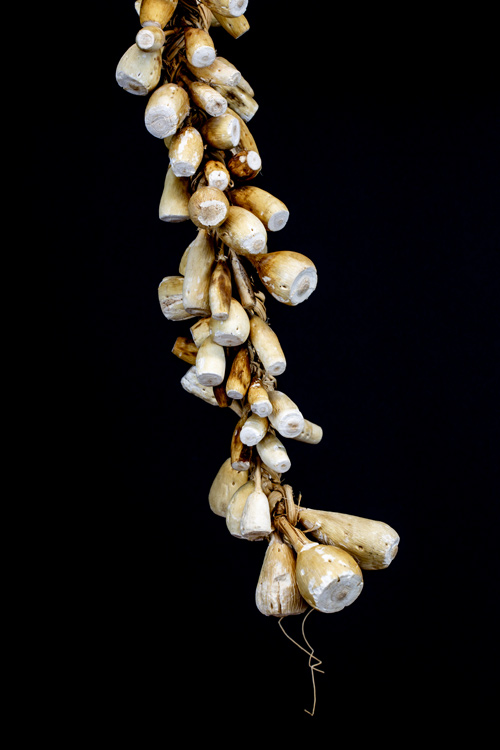
The day Sacagawea gathered Indian breadroot, Lewis wrote a detailed ethnobotanical description. The specimen he prepared a year prior is now used as the primary identifier of the species.
Knife River and St. Louis
by Kristopher K. Townsend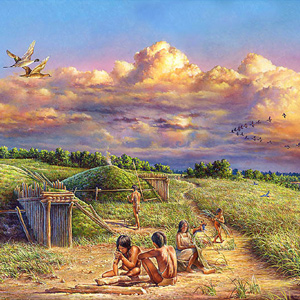
Jean Baptiste Charbonneau’s education began in a Hidatsa village. In St. Louis at the age of five or six, his classical education began under the guardianship of William Clark.
Helianthus annuus
by Kristopher K. Townsend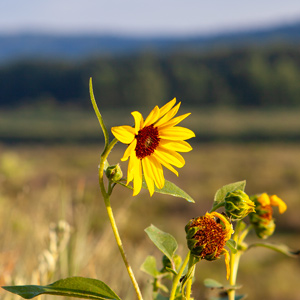
The common sunflower as a staple food among the Mandans and Lemhi Shoshones did not escape the attention of the journalists. Includes two traditional Hidatsa recipes.
Prunus virginiana
by Kristopher K. Townsend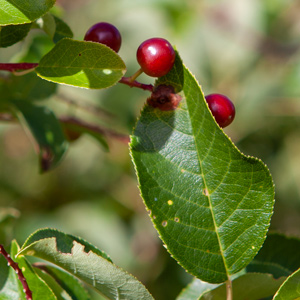
As they traveled up the Missouri in the summer of 1804, the journalists took note of a wild cherry different than the wild cherry of their homes. It was the common chokecherry, which grew on bushes instead of trees.
Prunus virginiana var. melanocarpa
by Kristopher K. Townsend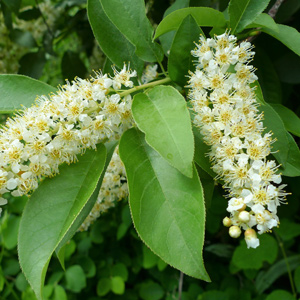
This variety of the common chokecherry gave Lewis his decoction of simples and was the subject of his botanical scrutiny.
Prunus pensylvanica
by Kristopher K. Townsend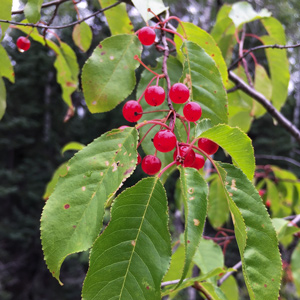
Before signing off in his last journal entry, Lewis had to botanize one last time. He concludes with an accurate description of the pin cherry, Prunus pensylvanica.
Prunus emarginata
by Kristopher K. Townsend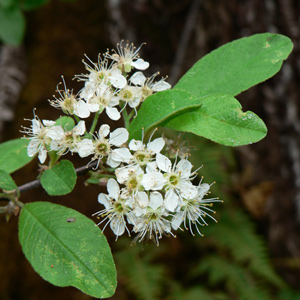
Lewis collected a specimen of bitter cherry, Prunus emarginata, while at Long Camp on 29 May 1806 and described it on 7 June 1806. He wrote that “the natives count it a good fruit”.
Lewis's threats and promises
by Joseph A. Mussulman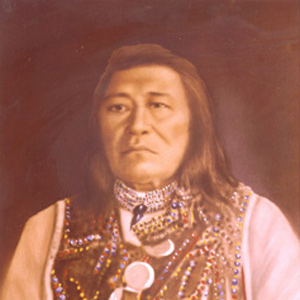
Pretending to have been insulted by their accusation, Lewis pompously declared that “if they continued to think thus meanly of us…they might rely on it that no whitmen would ever come to trade with them or bring them arms and amunition.”
Kinnikinnick, Arctostaphylos uva-ursi
by James L. Reveal, Joseph A. Mussulman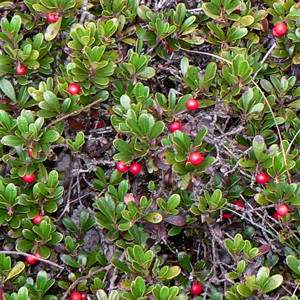
Lewis and Clark sometimes called it kinnikinnick, sometimes sacacommis. At Fort Clatsop on 29 January 1806, he described this useful plant.
At the Falls of the Missouri
by Joseph A. Mussulman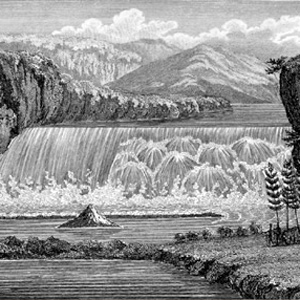
After Lewis’s preliminary sketch, later artists and photographers contributed to the visual documentation of the “sublimely grand” waterfall including Barralet, Gustavus Sohon, A. E. Mathews, and F. Jay Haynes.
'Blue Earth,' 'Clift of White' and 'Burning Bluffs'
by John W. Jengo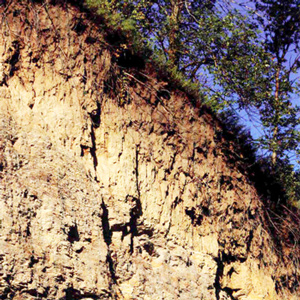
The Missouri River exposed rock formations that were geologically diverse, distinctly colored, rich in mineral content, and in some places, dramatically distinguished by steaming and smoking hot earth that beckoned to be investigated.
Endless possibilities
by Joseph A. Mussulman
One amateur historian averred that it was “a corruption of the French name Le Louis, given to the stream and pass by early French trappers” in honor of Meriwether Lewis. Another claimed that the mystery [wo]man was named after “Lolo [i.e., Lola] Montez, a noted Spanish beauty.”
"Much Lamented"
by Joseph A. Mussulman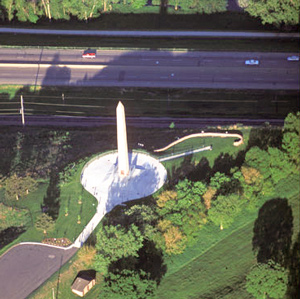
On 20 August 1804, the Corps proceeded thirteen miles, while young Floyd quickly grew worse. A little past noon they landed, and presently Floyd said, “I am going away.”
Anti calomel and the "genteel tradition"
by Joseph A. Mussulman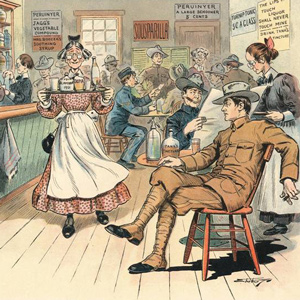
No more calomel! Not just an anthem, a reflection on the transition from the “Age of Enlightenment” to the “genteel tradition.”
Clarkia pulchella
by James L. Reveal, Joseph A. Mussulman, Kristopher K. Townsend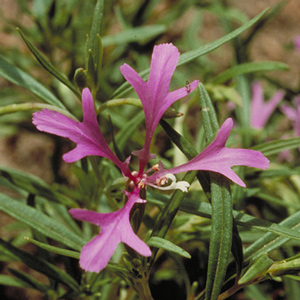
The plant’s common names include elkhorn, ragged robin, pink fairy, and deerhorn. In the spring of 1807 Lewis turned over his plant specimens to Frederick Pursh, who gave this flower the scientific name Clarkia pulchella
Bonasa umbellus
by Joseph A. Mussulman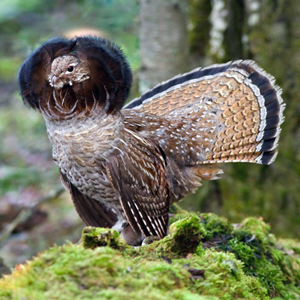
At Fort Clatsop on 5 February 1806, Reubin Field returned from a hunt with “a phesant which differed but little from those common to the Atlantic states.”
Five weeks with the "Chopunnish"
by Joseph A. Mussulman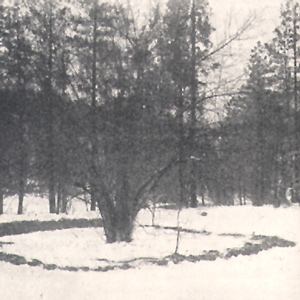
Upon its return from the Pacific coast in the spring of 1806, the expedition camped on the Clearwater River near present-day Kamiah from 14 May 1806 until 10 June 1806, waiting for the snow to melt on the crest of the Bitterroot Mountains.
The second gate
by Joseph A. Mussulman, Robert N. Bergantino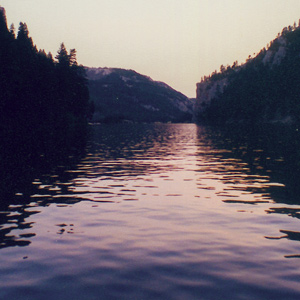
Late in the day on 19 July 1805, Lewis and his party entered a canyon between “the most remarkable clifts that we have yet seen.” They seemed to rise “from the waters edge on either side perpendicularly to the hight of 1200 feet.”
One of nature's greatest pests
by Joseph A. Mussulman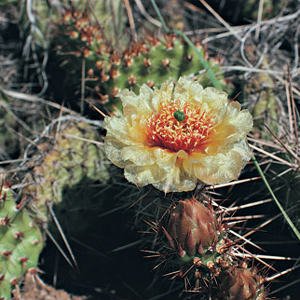
“The prickly pear is now in full blume,” he wrote on a mild early-summer day in 1805, “and forms one of the beauties as well as the greatest pests of the plains.”
This site is provided as a public service by the

Lewis and Clark Trail Alliance
with additional funding from the following: